Rug fringes are an important part of traditional rug craftsmanship, adding character, elegance, and structural support to different types of floor coverings. However, regular use, ageing fibres, improper cleaning, and everyday movement can cause these delicate edges to become loose, uneven, or damaged. Knowing how to restore rug fringes can help preserve the original appearance and durability of valuable rugs. Professional rug fringe repair, handmade rug maintenance, and carpet edge restoration are essential for keeping these details in good condition. At Umar Carpets, customers can explore professional rug care solutions designed to maintain the beauty and structure of their carpets in Hong Kong.
Understanding the Importance of Rug Fringes
Rug fringes are not simply decorative additions. In many handmade rugs, they are connected to the foundation threads that hold the woven structure together. These threads help maintain the rug’s construction and prevent the edges from becoming unstable.
When fringes begin to deteriorate, the damage may gradually affect the surrounding woven area. Missing threads, loose fibres, and weakened edges can make a rug look untidy while increasing the possibility of further structural problems.
Maintaining these details is particularly important for handmade, Persian, wool, and antique rugs. Proper care helps preserve their original craftsmanship and long-term value.
What Causes Rug Fringes to Become Damaged?
Before choosing a restoration method, it is important to understand why fringe deterioration happens. Different rugs experience different types of damage depending on their materials, placement, and usage.
Frequent Walking and Daily Activities
Rugs placed in busy areas experience continuous foot traffic. Walking across the edges repeatedly can gradually weaken the fringe threads. Hallways, entrances, and living rooms are particularly exposed to this type of wear.
Improper Vacuuming Techniques
Using a vacuum cleaner directly over delicate fringes can pull individual threads into the machine. Over time, this may result in broken fibres, tangled strands, and uneven edges.
Natural Ageing of Fibres
Older rugs may develop fragile foundation threads because of years of use. Natural materials such as cotton and wool require appropriate handling to maintain their strength and appearance.
Furniture and Heavy Objects
Moving chairs, tables, and other furniture across rug edges can catch the fringes. This creates unnecessary tension and may cause individual threads to separate from the main structure.
Previous Incorrect Repairs
Temporary repairs or unsuitable stitching methods can affect the original construction. Using incompatible materials may also create visible differences between repaired and original sections.
Signs Your Rug Needs Fringe Restoration
Recognising early signs of damage can help prevent more extensive repairs. Regularly examining the edges allows homeowners to identify problems before they spread.
Some common warning signs include:
- Loose or hanging fringe threads.
- Uneven lengths along the rug edges.
- Missing sections of decorative fringes.
- Frayed or broken foundation fibres.
- Fringes separating from the rug body.
- Visible gaps around the rug’s woven borders.
If several of these problems appear together, professional inspection can help determine the appropriate restoration approach.
Effective Methods to Restore Rug Fringes
The right repair technique depends on the rug’s material, age, weaving pattern, and the extent of deterioration. Professional restoration focuses on protecting the original structure while improving the appearance of damaged edges.
Careful Inspection of Damaged Areas
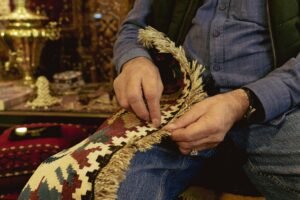
The restoration process begins with examining the entire fringe section. Specialists identify loose threads, broken fibres, missing sections, and possible damage to the foundation.
This assessment helps determine whether the rug requires minor stitching or more detailed reconstruction.
Repositioning Loose Fringe Threads
Slightly tangled or displaced threads may require careful repositioning. Each strand should be handled gently to avoid additional stress on weakened fibres.
Professional handling is particularly important for handmade rugs because their fringe construction can differ from that of machine-made products.
Replacing Broken or Missing Fibres
When original fringe threads are damaged beyond repair, suitable replacement fibres may be required. The replacement material should complement the original rug in terms of thickness, colour, texture, and strength.
This helps maintain a consistent appearance while supporting the repaired edge.
Reattaching Detached Fringes
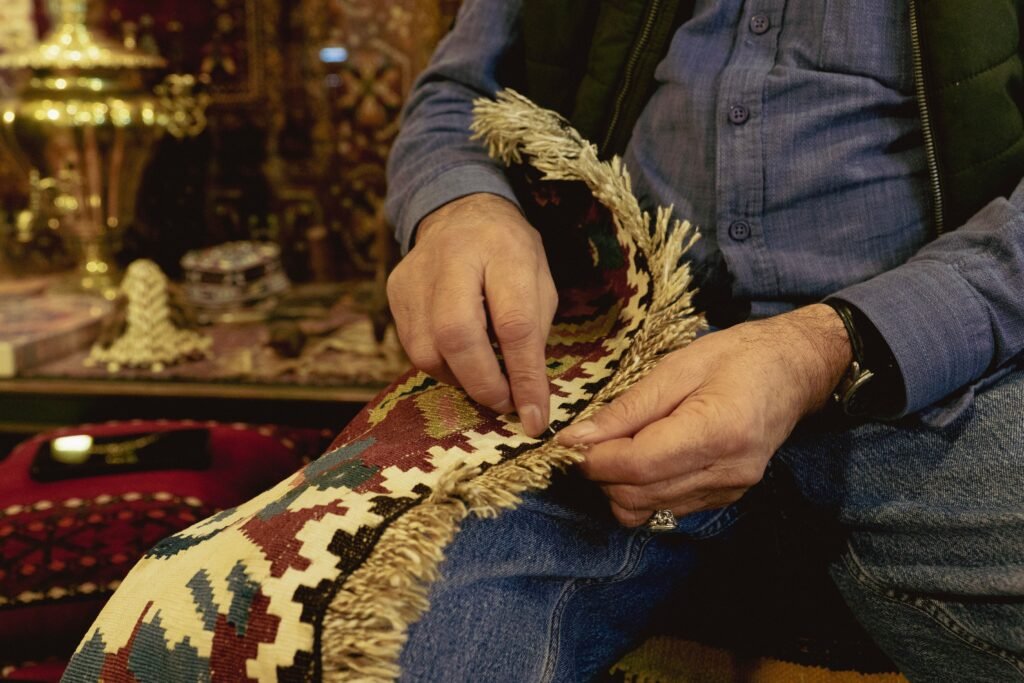
If fringes have separated from the rug body, structural reattachment may be necessary. This process requires appropriate stitching and an understanding of the rug’s original foundation.
A professional repair helps secure the affected area without unnecessarily changing the rug’s original design.
Restoring the Original Edge Appearance
After the structural work, attention can be given to the overall appearance of the fringe. Uneven sections may require careful adjustment to create a balanced finish while retaining as much original material as possible.
Common Rug Fringe Problems and Restoration Solutions
Different types of damage require different approaches. The following table highlights common issues and suitable restoration methods.
| Rug fringe problem | Suitable restoration method |
| Loose threads | Careful securing and stitching |
| Tangled fibres | Gentle separation and repositioning |
| Broken fringes | Replacement with matching fibres |
| Missing fringe sections | Professional fringe reconstruction |
| Uneven edges | Careful professional adjustment |
| Detached fringes | Structural reattachment |
| Weak foundation threads | Detailed structural restoration |
The most appropriate method should always be selected after examining the rug’s construction and overall condition.
Why Professional Rug Fringe Repair Is a Better Choice
Although minor fringe tangles may appear easy to manage, extensive damage requires specialist attention. Incorrect handling can weaken the foundation and create additional problems.
Professional technicians understand how different rug materials and weaving techniques affect restoration. They can select compatible fibres, identify structural concerns, and use suitable stitching methods.
For homeowners searching for carpet repair services Hong Kong, professional assistance can provide a practical way to maintain valuable rugs without compromising their original craftsmanship.
How Umar Carpets Helps Preserve Your Rugs
At Umar Carpets, the focus is on helping customers maintain the appearance, quality, and usability of their floor coverings. Every rug has individual characteristics, including its material, weaving pattern, age, and construction.
Understanding these differences is essential when planning restoration work. Whether a rug has loose fringes, damaged edges, or missing threads, proper assessment helps identify the most suitable solution.
Through professional Carpet restoration Hong Kong, Umar Carpets helps customers explore appropriate care and restoration options for their rugs.
The website, https://umarcarpets.hk/, provides information about the company’s carpet-related services. Customers looking for professional assistance can contact the team to discuss their rug’s condition and restoration requirements.
For enquiries, call + 85 2 9810 1943 or visit the website to request a FREE QUOTE.
Simple Ways to Protect Rug Fringes After Restoration
Once the restoration work is complete, regular maintenance can help preserve the repaired sections.
Use Gentle Vacuuming Methods
Avoid running rotating vacuum brushes directly over delicate fringes. Clean the surrounding rug surface carefully and pay attention to the edges.
Keep Furniture Away from Fringe Sections
Position furniture carefully to prevent legs and corners from catching the threads. Avoid dragging heavy objects across the rug.
Inspect Rug Edges Regularly
Check the fringes occasionally for loose strands, uneven sections, or early signs of deterioration. Addressing minor problems promptly can reduce the need for extensive repairs.
Rotate Rugs Periodically
Rotating a rug helps distribute everyday foot traffic more evenly. This can reduce excessive wear along particular edges.
Arrange Professional Maintenance
Handmade and antique rugs may benefit from periodic professional inspections. Specialists can identify structural weaknesses and recommend appropriate maintenance.
When Should You Consider Professional Fringe Restoration?
Professional restoration is worth considering when fringe threads start breaking, entire sections become detached, or the rug’s foundation appears weakened.
Waiting too long can allow damage to spread towards the woven body. Early attention can make the restoration process more manageable and help preserve the rug’s original design.
If your rug has sentimental, decorative, or financial value, choosing experienced specialists is particularly important.
Frequently Asked Questions
1. Can Damaged Rug Fringes Be Restored?
Yes. Damaged fringes can often be repaired through stitching, fibre replacement, reattachment, or reconstruction, depending on their condition.
2. What Causes Rug Fringes to Wear Out?
Common causes include regular foot traffic, improper vacuuming, furniture movement, ageing fibres, and weakened foundation threads.
3. Can I Restore Rug Fringes Myself?
You may gently separate minor tangles, but broken or detached threads should be handled by professionals to avoid further damage.
4. Should I Cut Frayed Rug Fringes?
No, cutting should not be your first option. Fringe threads may form part of the rug’s foundation, and removing them can weaken its structure.
5. Can Missing Rug Fringes Be Replaced?
Yes. Missing sections can often be reconstructed using suitable replacement fibres that match the original rug’s material and appearance.
6. How Long Does Rug Fringe Restoration Take?
The timeframe depends on the rug’s size, material, construction, and the extent of the damage. Extensive reconstruction generally requires more work.
7. Can Handmade Rug Fringes Be Repaired?
Yes. Handmade rug fringes can be repaired using techniques suited to their original weaving and foundation construction.
8. How Can I Prevent Fringe Damage?
Use gentle vacuuming methods, avoid pulling loose threads, keep furniture away from the edges, and inspect your rug regularly.
9. Is Professional Fringe Restoration Suitable for Antique Rugs?
Yes. Professional restoration can help preserve antique rugs, provided the methods and materials are selected according to their original construction.
10. Where Can I Find Rug Restoration Services in Hong Kong?
Umar Carpets offers carpet care and restoration solutions in Hong Kong. Visit https://umarcarpets.hk/ to explore our services and request a quotation.
Conclusion
Rug fringes contribute to the appearance, craftsmanship, and structural stability of many traditional floor coverings. When these delicate details become loose, broken, or detached, timely attention can prevent further deterioration. Understanding suitable repair techniques and following simple maintenance practices can help preserve your rug for years.
Choosing professional assistance to restore rug fringes can make a significant difference in maintaining the original beauty and structure of valuable floor coverings. Umar Carpets provides customers in Hong Kong with an opportunity to explore professional carpet care and restoration solutions for their rug maintenance needs.